dr. Clementine Boutry
Electronic Components, Technology and Materials (ECTM), Department of Microelectronics
Expertise: Biodegradable technologies, biodegradable functional materials and devices (MEMS, sensors, actuators, and electronics), wireless microsystems
Themes: Health and WellbeingBiography
Welcome to the Biodegradable Technologies group at ECTM !
Our multidisciplinary team aims to develop biodegradable MEMS, a new class of micro-electro-mechanical systems made entirely of biodegradable materials, including sensors, actuators, and electric circuits, for medical and other applications.
Please visit our Biodegradable Technologies website
For a detailed biography and CV, please visit this page.
Clementine Boutry has been recognized by a number of awards and grants including: Fellowships and grants:
- 2025 NWO VIDI grant on heart failure recovery
- 2023 ERC Starting grant on nerve repair
- 2023 Delft Health Initiative grant
- 2022 – 2025 Four times recipient of BioEngineering Institute grants for interfaculty collaborations
- 2022 Delft University of Technology Synergy Grant
- 2022 Dutch HTSF 4TU grant Green Sensors
- 2019 Recipient of the Delft University of Technology Fellowship
- 2014 European Marie Curie IOF grant on Nerve-Repair, collaboration between Prof. Z. Bao at Stanford University, USA, and prof. S. Lacour at EPFL, CH
- 2014 Swiss SNSF Postdoc mobility grant on biodegradable sensors, Postdoctoral research at Stanford University, USA
Personal and group awards:
- 2025 Best Student oral presentation, awarded to Zhengwei Liao (Ph.D. student) at the International Micro and Nano Engineering Conference MNE 2025 in Southhampton, UK
- 2023 Best poster presentation, awarded to Elena Aprea (Ph.D. student), at Biocube 2023, IT
- 2020 Innosuisse prize, “Best life sciences project”, Innosuisse Business Concept program, CH
- 2020 Geneus prize for Life science innovation, Campus Biotech Geneva, Switzerland
- 2015 2nd Best Student Paper Prize at IEEE SENSORS conference, Busan, Korea
- 2013 ETH Zurich Medal 2013 for outstanding Ph.D. thesis, Zurich, Switzerland
- 2011 2nd Best Poster Award at MME conference, Toensberg, Norway
- 2006 C. Johnson Award for Best Student Poster at BEMS conference, Cancún, Mexico
- 2004 Diploma Thesis awarded with grade 6/6, EPFL Lausanne, Switzerland
EE2G1 Electrical Engineering for the Next Generation
BSc 2nd year project
ET4127 Themes in biomedical electronics
BioMEMS, biosensors, bioelectronics, ultrasound, microfluidics, wavefield imaging in monitoring, diagnosis and treatment
ET4289 Integrated circuits and MEMS technology
introduction in the fabrication technologies used for Integrated Circuits and MEMS
Netherlands Organ-on-Chip Initiative
To develop new microphysiological platforms to better predict the effect of medicines, based on a combination of human stem cells and microtechnology.
- Biodegradable Smart Face Mask for Cough Acoustic Sensing
Mohammad Javad Bathaei; Ata Golparvar; Sina Hashemi Zadeh; Denys Nikolayev; Filipe Arroyo Cardoso; Clementine M. Boutry;
ACS Sensors,
Volume 11, Issue 7, pp. 5535–5552, 2026. DOI: 10.1021/acssensors.5c04572 - Transient Battery-Free Microphone-Integrated Face Mask
M. J. Bathaei; A. Golparvar; F. A. Cardoso; C. M. Boutry;
In Eurosensors,
pp. 271-272, 2026. DOI: 10.5162/eurosensors2026/8.3.3 - Biodegradable Microwave Cavity Resonator
Bathaei, Mohammad Javad; Hashemizadeh, Sina; Arroyo Cardoso, Filipe; Nikolayev, Denys; Boutry, Clementine M.;
IEEE Microwave and Wireless Technology Letters,
pp. 1-4, 2025. DOI: 10.1109/LMWT.2025.3588738
Keywords: ...
Impedance;Biomembranes;Sensors;Antennas;Wireless sensor networks;Resonant frequency;Resonance;Couplers;Wireless communication;Robot sensing systems;3-D printing;biodegradable materials;cavity resonator;laser cutting.
Abstract: ...
This letter presents the first fabrication and characterization of a biodegradable coaxial cavity resonator, focusing on the measurement of complex permittivity of encapsulation as well as |S11| and impedance parameters. The resonator components are 3D-printed from plant-based resin, coated with silver-coated copper flakes, and enclosed by a laser-cut zinc membrane. A monopole coupler antenna, inspired by the “Great Seal Bug,” is co-designed with the cavity to enable near-field coupling and achieve frequency-selective, near- 50 Ω impedance-matched wireless sensing. Numerical and experimental analysis of the gap between post and membrane (G-post), and between the coupler antenna and post, resulted in | S11| of −30.3 dB at 1.7 GHz, and a quality factor of 307, outperforming existing flat biodegradable resonators. A 40-MHz resonance shift is observed with a 20 μ m variation in G-post, highlighting the resonator’s high sensitivity to membrane position. This system enables battery-free wireless sensing with biodegradable antennas for biodiversity monitoring. - Wearable and Implantable Devices for Continuous Monitoring of Muscle Physiological Activity: A Review
Liao, Zhengwei; Golparvar, Ata; Bathaei, Mohammad Javad; Cardoso, Filipe Arroyo; Boutry, Clementine M.;
Advanced Science,
pp. e09934, 2025. DOI: https://doi.org/10.1002/advs.202509934
Keywords: ...
bioelectronics, biomechanics, electrophysiology, soft and flexible electronics, tissue oxygenation.
Abstract: ...
Abstract Muscle plays a vital role in movement and metabolic regulation, establishing it as a cornerstone of overall health. Monitoring muscular parameters is critical for disease diagnosis, post-surgical recovery, and human–machine interface control. In recent decades, numerous technologies have emerged to monitor muscular biophysical and biochemical processes. The field has transitioned significantly from reliance on large, clinic-bound instrumentation to the development of miniaturized wearable and implantable systems capable of continuous real-time monitoring in everyday settings. This article presents a critical overview of recent advances, with a focus on material and device innovations in muscular monitoring. Starting with the fundamental characteristics of muscle tissue and the physiological origins of biosignals, the discussion subsequently shifts to recent developments in wearable and implantable bioelectronic systems tailored to monitor electrophysiological, biomechanical, and tissue oxygenation signals. Finally, current research challenges and outline emerging opportunities are highlighted in muscular monitoring. Owing to its interdisciplinary nature and growing societal demand for personalized healthcare, muscular monitoring is poised to catalyze transformative innovations in both clinical and consumer applications.
document - Biodegradable Microwave Cavity Resonator
Mohammad Javad Bathaei; Sina Hashemizadeh; Filipe Arroyo Cardoso; Denys Nikolayev; Clementine M. Boutry;
IEEE Microwave and Wireless Technology Letters,
Volume 35, Issue 11, 2025. DOI: 10.1109/LMWT.2025.3588738 - Environmental and Ecological Monitoring with Biodegradable Technologies
Mohammad Javad Bathaei; Yaren Bathaei; Zhengwei Liao; Maryam Yazdanmehr; Sarab S. Sethi; Denys Nikolayev; Filipe Arroyo Cardoso; Clementine M. Boutry;
Advanced Science,
Volume 13, Issue 4, pp. e11452, 2025. DOI: 10.1002/advs.202511452Digital Object Identifier (DOI) - Wearable and Implantable Devices for Continuous Monitoring of Muscle Physiological Activity: A Review
Zhengwei Liao; Ata Golparvar; Mohammad Javad Bathaei; Filipe Arroyo Cardoso; Clementine M. Boutry;
Advanced Science,
Volume 13, Issue 15, pp. e09934, 2025. DOI: 10.1002/advs.202509934 - Towards Sustainable Electronics: Wafer-Scale Fabrication of Fully Biodegradable CMOS Devices
Laura Cavedoni; Zhengwei Liao; Yukun Lian; Francesco Stallone; Filipe Arroyo Cardoso; Clementine Boutry;
In Micro Nano Engineering (MNE),
2025. - Wavelength-selective photodetector for NADH fluorescence detection
Zhengwei Liao; Laura Cavedoni; Ceren Kutucu; Padmakumar Rao; Clementine Boutry; Filipe Arroyo Cardoso;
In Micro Nano Engineering (MNE),
2025. - Recent advances in magnetic polymer composites for BioMEMS: A review
Zhengwei Liao; Oualid Zoumhani; Clementine M Boutry;
MDPI Materials,
Volume 16, Issue 10, 2023. - Biodegradable sensors are ready to transform autonomous ecological monitoring
Sarab S. Sethi; Mirko Kovac; Fabian Wiesemüller; Aslan Miriyev; Clementine M. Boutry;
Nature Ecology & Evolution,
Volume 6, pp. 1245-1247, 2022. DOI: 10.1038/s41559-022-01824-w
BibTeX support
Last updated: 5 Dec 2025
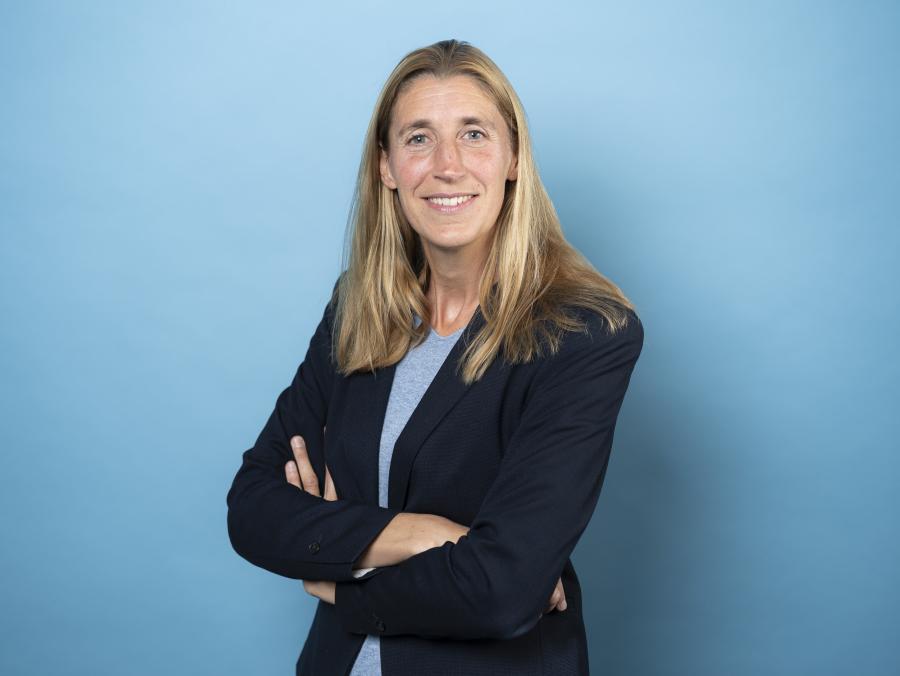
Clementine Boutry
PhD students
MSc students
- Joseph Giannouklidis (EI)
- Joseph Giannouklidis (ECTM)
- Mario Maganto Torres (ECTM)
- Zishani Mishra (EI)
- Jesse Robert (EI)
- Zhidou Wang (EI)
Alumni
- Niklas Plessing (ECTM) (2026)
- Juliet Obuseh (ECTM) (2026)
- Laura Cavedoni (EI) (2025)
- Tommaso Lodovisi (EI) (ECTM) (2025)
- Haoxiang Jiang (ECTM) (2025)
- Yukun Lian (ECTM) (2024)
- Eline Cox (ECTM) (2024)
- Ceren Kutucu (ECTM) (2024)
- Maarten Lemmens (ECTM) (2024)
- Samhitha Duvvuri (ECTM) (2024)
- Edoardo Domenella (ECTM) (2024)
- Teresa Onorato (ECTM) (2024)
- Saeed Mohammadi Nasr (ECTM) (2024)
- Friso Kahler (ECTM) (2024)
- Tim Uliss (Pornpawee) (ECTM) (2024)
- Nikita Gopakumar (ECTM) (2023)
- Kiana Griffith (ECTM) (2023)
- Matteo Pirro (ECTM) (2022)
- Francesco Stallone (ECTM) (2022)
- Oualid Zoumhani (ECTM) (2022)
- Zhengwei Liao (ECTM) (2022)